

How to make paper flower petals have different textures?
Oct 20, 2025
Leave a message
When it comes to paper flower customization, one of the most fascinating aspects is creating petals with different textures. As a seasoned Paper Flower Customization supplier, I've delved deep into the art and science of achieving these unique textures. In this blog, I'll share some of the techniques and insights that have helped me create stunning paper flower petals with diverse tactile qualities.
Understanding the Basics of Paper Texture
Before we dive into the methods of creating different textures, it's important to understand the basic properties of paper. Paper is made from fibers, and the way these fibers are arranged and treated can significantly affect its texture. For example, smooth paper has tightly packed fibers, while rough paper has more loosely arranged fibers. Different types of paper, such as cardstock, tissue paper, and crepe paper, also have distinct inherent textures that can be enhanced or modified.
Techniques for Creating Different Textures
Embossing
Embossing is a popular technique for adding a raised texture to paper flower petals. To emboss paper, you'll need an embossing tool or a die - cutting machine with embossing capabilities. First, place the paper between the embossing plate or die. The machine will then press the design onto the paper, creating a raised pattern. You can use a variety of embossing designs, from simple geometric shapes to intricate floral patterns. This technique works well for creating petals that look like they have natural veins or ridges, adding a realistic touch to your paper flowers. For larger projects, like Giant Decorative Artificial Paper Flower Props, embossing can make the petals stand out and look more three - dimensional.
Crinkling
Crinkling is a simple yet effective way to give paper petals a wrinkled, aged, or natural - looking texture. Take a sheet of paper and crumple it up tightly in your hands. The more you crumple it, the more pronounced the wrinkles will be. After crumpling, carefully unfold the paper. You can then shape the paper into petals. This technique is especially useful for creating petals that mimic the look of real flowers that have been slightly wilted or have a more organic shape. For table decorations, Paper Flowers For Table Decorations with crinkled petals can add a soft, romantic touch.
Adding Layers
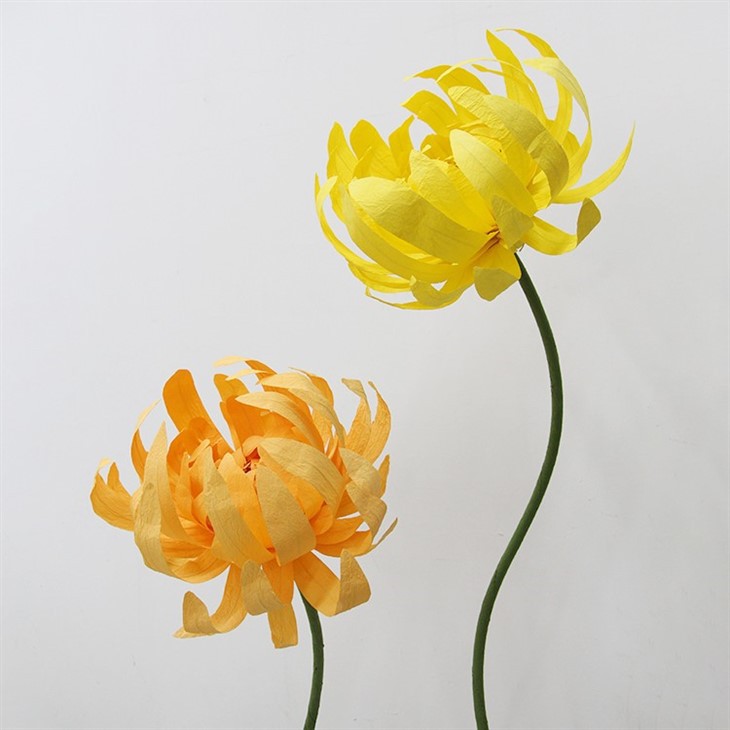
Layering different types of paper can create a complex and interesting texture. For example, you can layer a thin sheet of tissue paper over a thicker cardstock. The tissue paper will add a delicate, translucent quality, while the cardstock provides structure. You can also use different colored papers to create a more visually appealing effect. When layering, use a glue that is suitable for paper, such as a glue stick or a spray adhesive. Make sure to apply the glue evenly to avoid any lumps or bubbles. This technique is great for creating petals that have a multi - dimensional and rich texture, which is perfect for Giant Decorative Paper Art Chrysanthemum Customization.
Using Textured Mediums
There are various textured mediums that you can use to add texture to paper flower petals. For example, you can use sandpaper to roughen up the surface of the paper. Rub the sandpaper gently over the paper to create a rough, grainy texture. Another option is to use fabric medium or gesso. Apply a thin layer of the medium to the paper using a brush. As it dries, it will create a slightly raised, textured surface. You can also mix in small particles, such as glitter or small beads, into the medium for an even more unique texture.
Painting and Staining
Painting and staining can not only add color to your paper flower petals but also create a textured effect. For example, you can use a dry - brushing technique. Dip a dry brush into paint and then gently brush it over the paper. This will leave small flecks of paint on the surface, creating a rough, uneven texture. Staining the paper with tea or coffee can also give it an aged, weathered look. Soak the paper in a mixture of tea or coffee and water for a few minutes, then let it dry. The longer you soak the paper, the darker and more textured it will become.
Choosing the Right Paper for Different Textures
The type of paper you choose plays a crucial role in achieving the desired texture. For embossing, cardstock is a great choice because it is thick enough to hold the embossed design. Cardstock also provides good structure for larger flower petals. Tissue paper is ideal for crinkling and layering because it is lightweight and easy to manipulate. Crepe paper has a natural wrinkled texture, which can be further enhanced using other techniques. When creating Giant Decorative Artificial Paper Flower Props, you may need to use a combination of different papers to achieve the best results.
Finishing Touches
After creating the desired texture on your paper flower petals, it's important to add some finishing touches. You can use a clear spray sealant to protect the texture and make the petals more durable. This is especially important if the paper flowers will be used in a high - traffic area or for outdoor decorations. You can also add some details, such as glitter or rhinestones, to make the petals sparkle and catch the light.
Conclusion
Creating paper flower petals with different textures is a rewarding process that allows you to add a unique and personalized touch to your paper flowers. Whether you're creating Paper Flowers For Table Decorations or Giant Decorative Paper Art Chrysanthemum Customization, the techniques mentioned above can help you achieve stunning results.
If you're interested in our paper flower customization services, we'd love to hear from you. Whether you have a specific design in mind or need inspiration for your next project, feel free to reach out to us for a detailed discussion and to start the procurement process. We're committed to providing high - quality, customized paper flowers that meet your unique needs.

References
- "The Art of Paper Flowers" by Jane Smith
- "Paper Crafting Techniques" by John Doe